Insurance Eligibility Verification: Steps to Stop Denials Before They Start
When a patient comes in for a check-up, their appointment goes smoothly. Later on, it is found out that the insurance of the patient expired a month ago. In this case, it is the responsibility of the staff to call the patient and obtain updated information pertaining to the insurance before filing a claim.
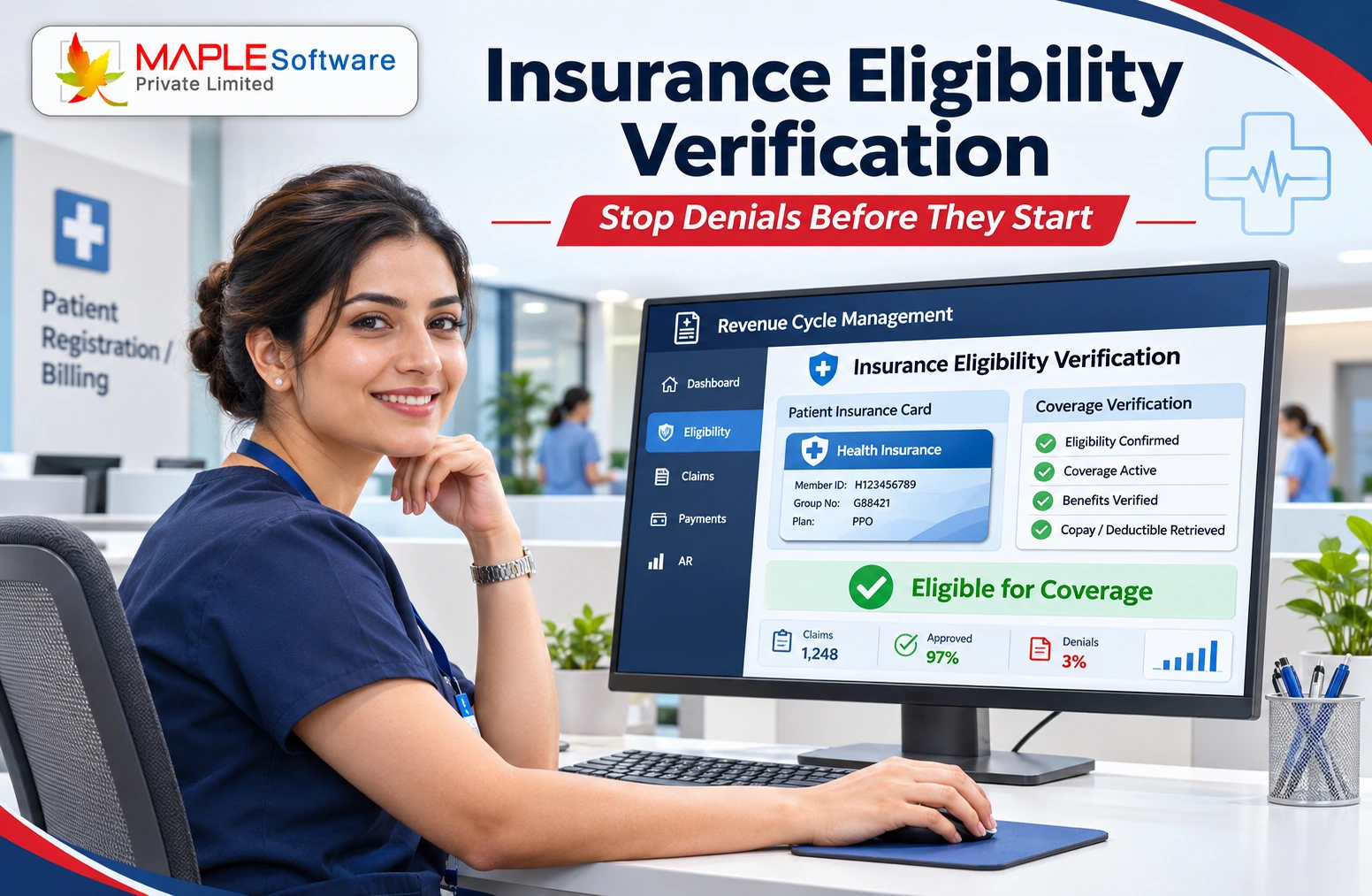
Insurance eligibility verification is a way to determine whether the patient has active insurance on the date of the appointment. It helps the billing team identify the correct insurance payer before submitting a claim. The complete review at the front desk also provides thorough information about the coverage limits, networks, and required authorization. Here is the effective workflow for avoiding unnecessary problems with filing.
What Is Insurance Eligibility Verification?
Insurance eligibility verification is a process used to determine if a patient is enrolled in a health plan. Medical offices typically check eligibility at the time the appointment is created or registration occurs. Before the appointment, the eligibility information is updated.
The verification should confirm the identity of the patient and payer, the plan, the start dates, and the status of the insurance. The workers examine the health plan benefits for the service needed.
Why Insurance Eligibility Errors Lead to Claim Denials
A claim can be rejected at pre-adjudication stage, due to discrepancies in the member ID or the demographic information with those in the payer’s records. A claim that has reached adjudication can also be denied, for instance, if the coverage was not active or wrong plan was invoiced. Although the outcomes are different, the necessary rework will be the same for both cases.
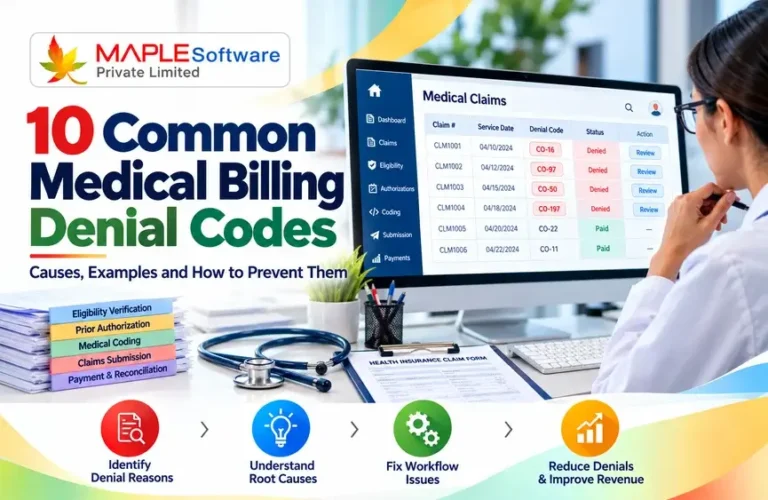
Typical issues involve terminated insurance coverage, wrong relation to subscriber, wrong payer record, missing second insurance, services not covered under the benefit plan, missing referrals, and missing pre-approvals. The key point is that coverage issues are related to frequent denial codes bills submitted by the billing department. An effective process of denial review is tracking every denial to registration, eligibility, benefits, or authorization and not simply categorizing every unpaid claim as a coding error.
Patient Eligibility Verification Process: Nine Practical Steps
The verification of patient eligibility is done more efficiently by adopting a reliable checklist, assigning an appropriate individual to manage the checklist, and developing procedures for dealing with cases that cannot be solved.
1. Collect the necessary demographic data of the patients
Validation of the patient’s legal name, birth date, address, subscriber name, and relationship with the patient must be carried out in practice. The collected data should be compared with the insurance card instead of merely depending on some aged EHR.
2. Confirm the identifiers for insurance
Accurate records for the insurance provider, plan type, subscriber number, group number, and presence of secondary coverage must be taken. The correct payer that is supposed to be paid first has to be identified and inconsistencies should be removed prior to the visit.
3. Verify coverage on the service date
The exact date of insurance validity and expiry must be verified. It must be borne in mind that data obtained through previous appointments is not necessarily authentic during the current visit.
4. Check service-specific benefits
Make sure to check the active policy indicator as well. When insurer gives the necessary information one has to pay attention to the certain beneficial category, limitations, exemptions, rules, fees
5. Determine if Authorization and Referral are Required
At the outset, find out if the approval is needed in order to accomplish the procedure, under whose direction that must be done, and whether any earlier approval is still valid. Do not assume that being eligible is the same as approval.
6. Use the Appropriate Electronic Eligibility Verification Channel
A HIPAA-standard X12 270 inquiry requests eligibility and benefit information, while the X12 271 response returns information available from the payer.
7. Get Medicare Payments Right
Regarding eligible Medicare fee-for service operations, the CMS HETS helps permitted entities in obtaining real-time 270/271 inquiries; however, it cannot be used for Medicare Advantage and part D queries, and the latter need to make use of plan-specific methods.
8. Keep Track of Outcomes and Questions
The verification date, the source where verification was done, and the required benefit findings need to be retained along with a reference number if any was assigned.
9. Recheck when circumstances change
Make sure that the pertinent insurance eligibility checks are done again just before the appointment in case there is any change in coverage especially, if it is a rescheduled appointment, a new plan year has started or the details of the patient have been updated. Make sure that all the outstanding issues have been assigned to someone before they are sent to billing.
An Insurance Verification Example From a Medical Practice
Think about a fictional orthopedic clinic. A repeat client books their imaging service with their insurance card from the previous year. The registrar finds out that a change from last year’s employer resulted in different network and authorization rules for the new plan when conducting pre-visit verification. The staff updates the registration, contacts the insurance, and tells the clinical staff to make sure that they understand the authorization requirements before the imaging day.
This additional work can help avoid submitting claims to the wrong payer or having the claim denied for authorization reasons. It also provides the patient an opportunity to get an idea of what they may have to pay out of pocket.
Eligibility vs. Benefits Verification vs. Prior Authorization
Though related, the terms carry different meanings, and cannot be used interchangeably. Eligibility informs whether a patient is enrolled in the plan and covered by it within the defined timeframe. While verifying benefits, the insurer determines coverage for services including limitations and details about cost-sharing. For prior authorization the payer consults about the given service.
A patient might be enrolled in the program but has no coverage for an elective procedure. Another patient might have coverage but is still required to obtain prior authorization. A referral from a physician might be another requirement of the plan. None of the eligibility, benefits verification, or prior authorization can guarantee reimbursement by itself.
Common Insurance Verification Mistakes to Avoid
The most serious error is to think that a green “active” status answers all questions. It does not provide evidence of participation, advantages of the service, authorization, coordination of benefits, or medical necessity.
Some more mistakes that could be avoided include double-checking the information only for the new patients, failing to check the new insurance card for the patient, ignoring discrepancies in the reply from the payer, and not taking notes on the verification process. The registrars should have an exception queue in functioning to help sort out all the confusing information they get, and have an understanding point that may assist them in verification.
How Eligibility Verification Enhances Front-End Revenue Cycle Management
Front-end Revenue Cycle Management refers to the steps undertaken in the process before attending to a patient. Scheduling appointments, making patient records, checking insurance eligibility, and reviewing benefits are the elements of front-end RCM that deliver the necessary information to facilitate billing throughout the stages of the process.
Better business processes implemented in the area of front-end RCM can provide an opportunity to minimize errors and improve communication with patients in terms of healthcare costs. Measure some of the key operational metrics: the percentage of visits scheduled in advance and checked prior to the service provided, unresolved eligibility exceptions, denials due to wrong-payer assignment, and denial reasons that relate to eligibility or authorization. It is also helpful to compare the metrics over time, as they may provide surprise learning.
How Maple Software Supports Eligibility and RCM Workflows
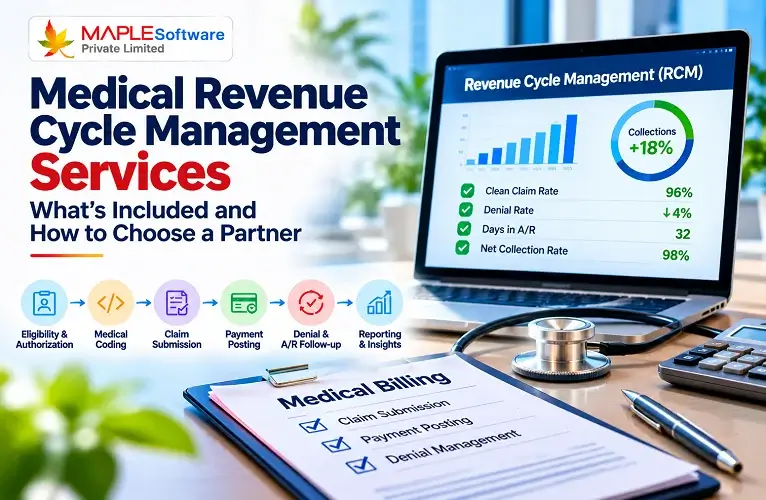
Among the medical revenue cycle management services offered by Maple Software are patient eligibility and benefits verification, requesting pre-authorization, dealing with claims, posting payments, managing denial, carrying out accounts receivables follow-up and reporting revenue cycle progress.
For the practice contemplating using an external service, they need to answer practical questions: Who is responsible for pre-visit check? How do the payer exceptions get handled? How do the billing and registration teams exchange fixes? What reporting does produce an overview of denial reasons? All these discussions will define the compatibility of the service model with practice’s workflow.
Final Thoughts
The process of verification of insurance eligibility is most suitable if it is initiated earlier, is more than just about the active policy status, and creates a documented route for exceptions. Look into a few of your recent denials regarding insurance coverage and analyze which information could have been verified before the appointment. This is a good basis for improving RCM.
If your practice needs assistance with anything involving insurance verification or denial management, you can contact Maple Software to learn about its RCM services.
Frequently Asked Questions
1. What is the definition of insurance eligibility verification in the context of medical billing?
It is a process that checks whether the patient has enrolled in a health plan, the applicable coverage status, and plan characteristics before any treatment or making the claim. The purpose of insurance eligibility verification is for the practices to determine proper payers and any possible issues related to billing matters.
2. How does a healthcare provider perform the insurance eligibility verification process?
The providers perform insurance eligibility verification by comparing the patient and payer’s Identification numbers with the information provided by the payers, making the eligibility transaction through the payer’s portal, checking applicable requirements and benefits, and identifying anything that requires more investigation.
3. How does insurance eligibility verification assist in avoiding the rejections of claims?
Insurance eligibility verification reveals the status of the plan coverage in terms of inactivation of coverage, ID problems, incorrect information about payers, and specific requirements for the plan prior to the submission of claim; however, other causes of denial require separate control processes.
4. What is the difference between eligibility verification and prior authorization?
Eligibility confirms coverage status. Prior authorization is a separate payer decision required for certain services. An eligible patient may still need authorization before treatment.
5. Can insurance eligibility verification be automated?
Yes. Practice-management tools and clearinghouses can send electronic eligibility inquiries and display payer responses. Staff still need to interpret exceptions, review service-specific requirements, and resolve incomplete or contradictory results.